 Dr. Ahmed Garsh
Power of Sight
Dr. Ahmed Garsh
Power of Sight
Dr. Ahmed Garsh
Power of Sight
Dr. Ahmed Garsh
Power of Sight
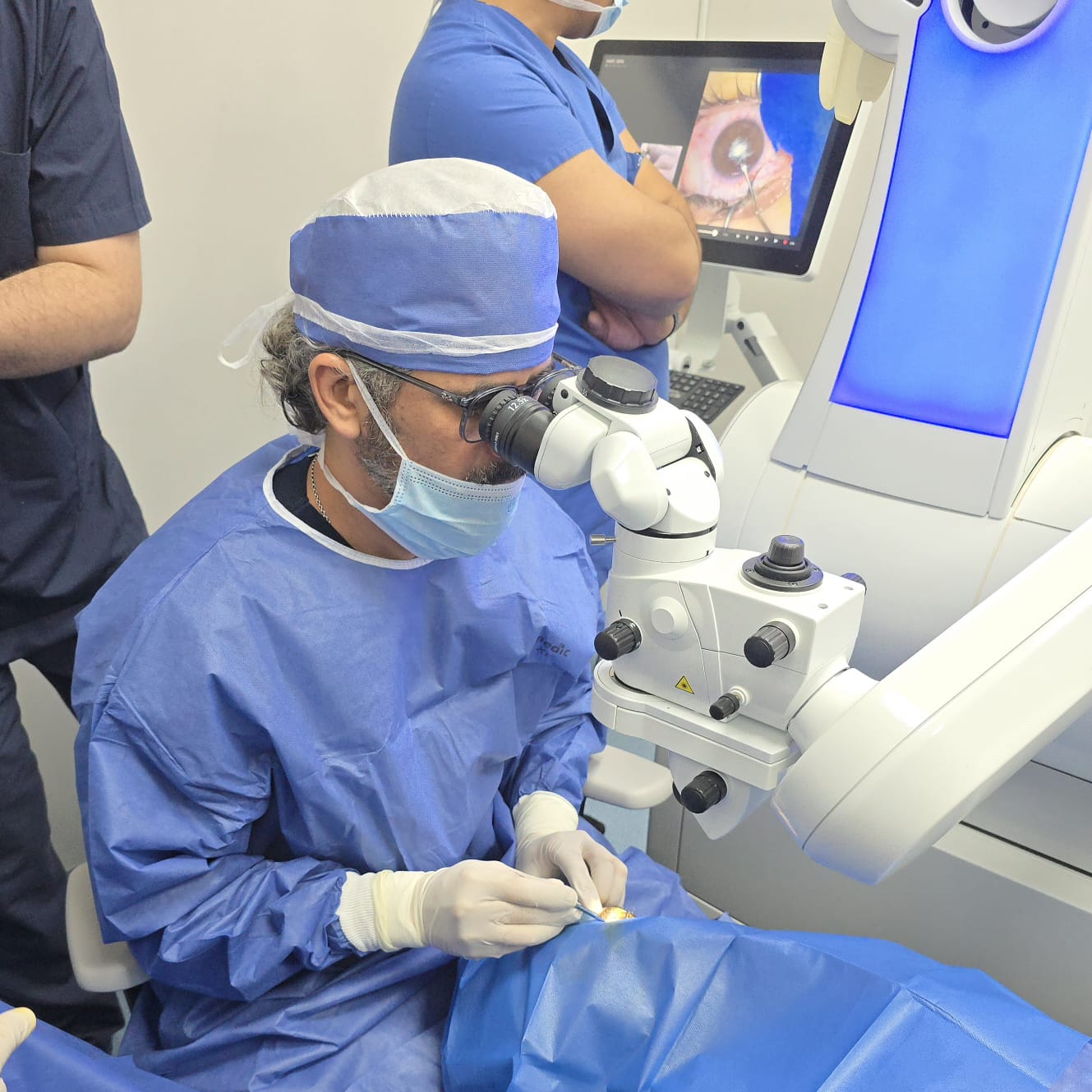
Ophthalmologist & Eye Surgeon
Dr.
Laser & lens vision correction, cataract and cornea — surgery practiced with precision and patience, under the microscope where every micron counts.
Trained in Egypt and abroad, with international fellowship and society memberships in cataract and refractive surgery.



Focused subspecialty care across the front of the eye — from diagnosis to microsurgery.
Bladeless LASIK, femto-laser and implantable lenses (ICL) — tuned precisely to each eye.
Micro-incision cataract surgery with premium lens implants for bright, clear vision.
Keratoconus management, cross-linking, intracorneal ring segments (ICRS) and corneal transplantation.
Every technique explained simply — with Dr. Garsh walking you through it on video.
Laser applied directly to the corneal surface — no flap. Maximum long-term stability; ideal for thin corneas and athletes.
🕒 Recovery 3–5 daysVision correction under a thin corneal flap — created with a precise blade (traditional) or a bladeless femtosecond laser (Femto-LASIK) for micron precision, faster healing and less dry eye.
🕒 Recovery 24 hours – next day3rd-generation keyhole surgery through a ~2mm incision, with no flap. Preserves corneal strength — excellent for athletes.
🕒 Recovery 24 hoursA permanent collamer lens placed inside the eye — for high prescriptions and corneas unsuitable for laser. HD vision, and reversible.
🕒 Recovery a few hoursA staged protocol by disease stage: cross-linking (CXL) to halt progression, intracorneal rings (ICRS) to reshape, and partial/full transplant (DALK) when needed.
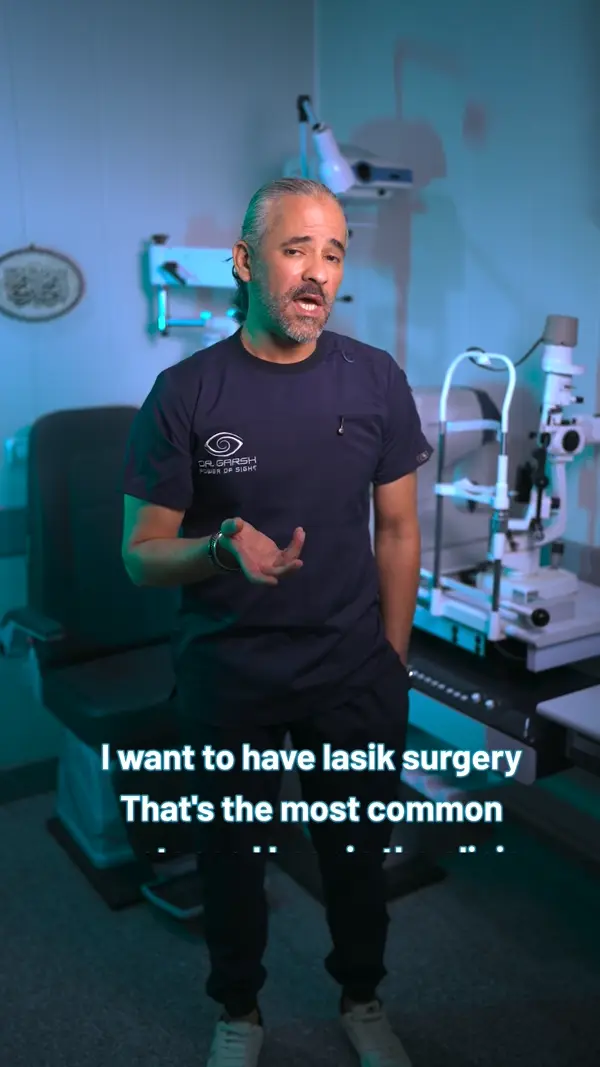
🕒 Staged treatment“I want LASIK” is the sentence Dr. Garsh hears most in clinic — and, as he explains here, it was never one single operation. Four short episodes tracing how vision correction actually evolved.
 Part 1
Why “I want LASIK” is the wrong place to begin. Every advance in surgery — from keyhole gall-bladder operations to the cornea — chases the same goals: fix the problem, leave the smallest mark possible.
 Part 2
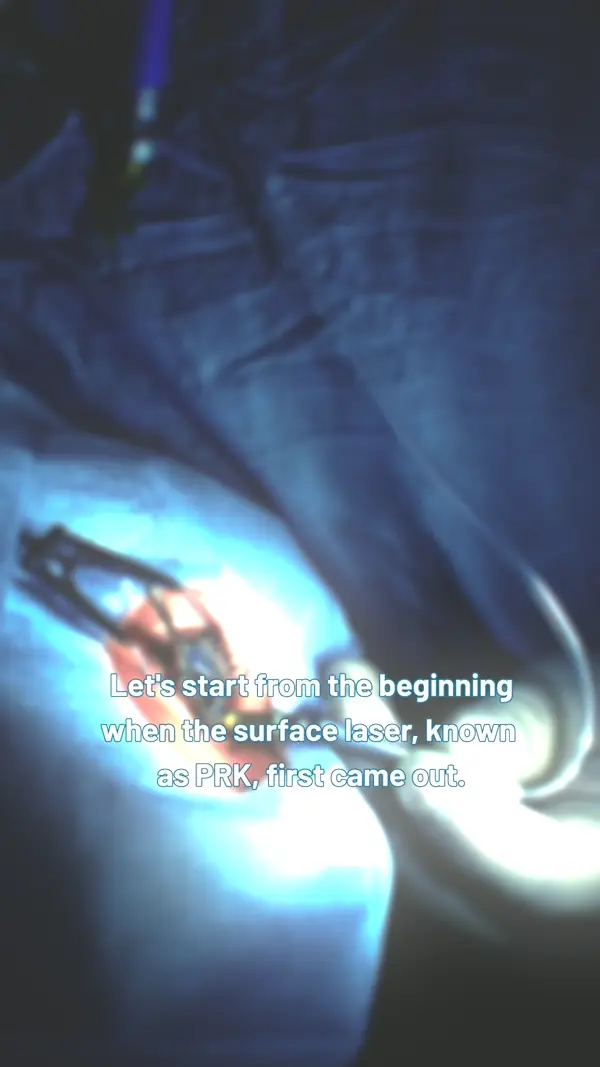
The first generation: laser applied straight to the corneal surface. It worked — but left three limits, including the healing wound and a strict ceiling on how many degrees could be corrected. Then came the idea of the flap.
 Part 3
Lifting a thin flap dropped recovery to a single day. Then the femtosecond laser replaced the blade — micron precision, more tissue preserved, and the door opened to correcting far more than before.
 Part 4
No flap at all. The laser works inside the cornea through a roughly 2 mm opening, preserving the eye’s natural structure — the principle from part one, finally delivered.
Three locations across Cairo. Call to book — the clinic team will confirm your appointment and share the exact address.
The full address is shared by phone when you book your appointment.
Questions about a procedure, or want to book surgery directly? Call or message us.
Pick a time that suits you. We confirm every appointment within one business day.
Prefer to talk to someone? Call any clinic above or message us on WhatsApp.